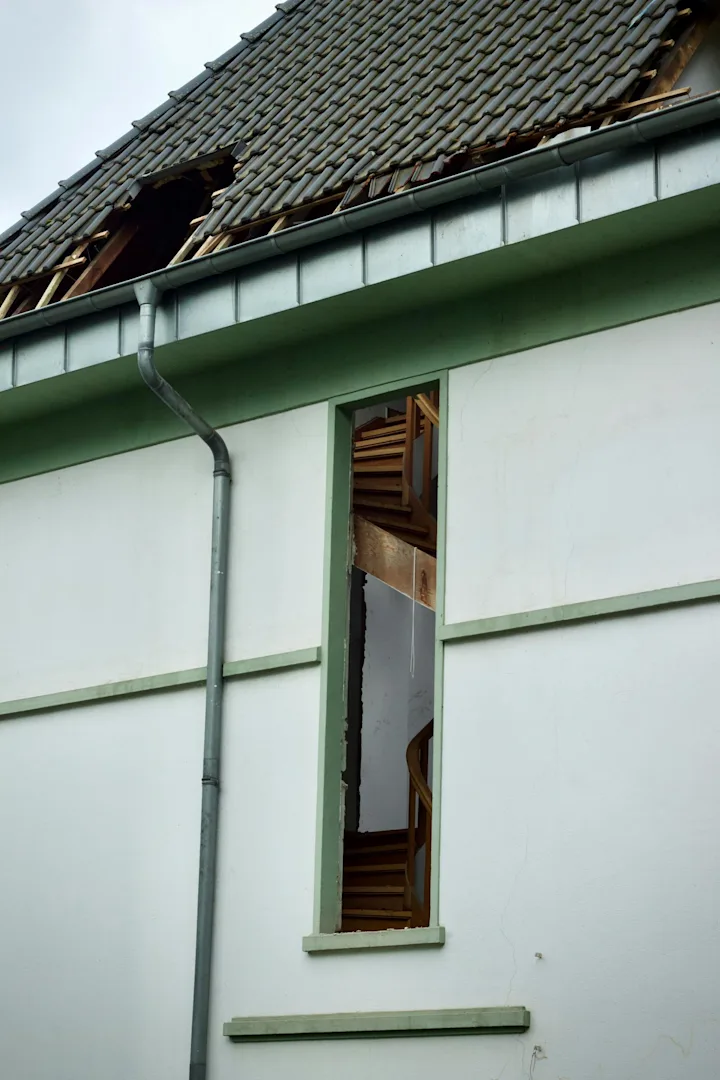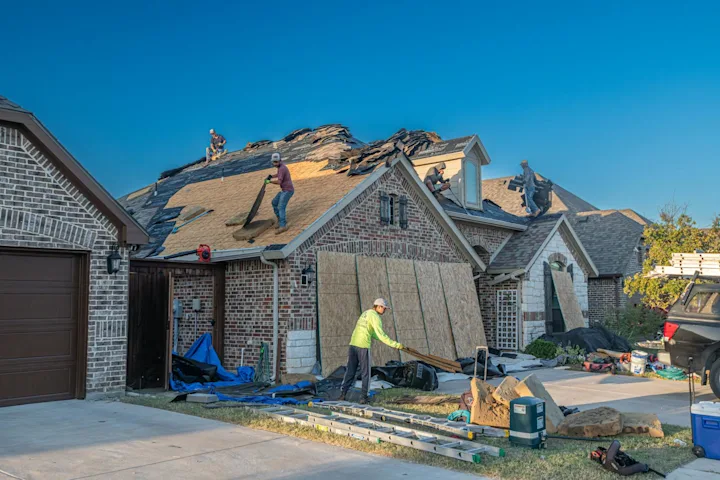
Hail vs. wind damage is one of the first distinctions an adjuster has to make on a roof claim. Both can occur in the same storm, but they do not usually leave the same evidence. Hail tends to create impact patterns and collateral dents; wind tends to lift, crease, tear, or remove shingles along exposed edges and pressure zones.
For homeowners, the goal is not to diagnose every mark from the ground. It is to understand why the adjuster is looking beyond one circled shingle. For carriers and field adjusters, the goal is consistency: same storm facts, same roof zones, same documentation standard.
What hail damage usually looks like
IBHS notes that granule loss alone does not automatically prove hail damage. Adjusters look for a pattern that fits impact: bruising, mat fracture, crushed granules, matching hits on soft metals, and damage density across test squares. A credible hail assessment also checks whether the roof condition is fresh or whether the marks could be blistering, foot traffic, manufacturing issues, or long-term weathering.
Random impact pattern across a slope, not only along one installation line.
Dents on soft metals such as vents, flashing, gutters, and downspouts.
Bruised or fractured shingle mat when inspected safely at roof level.
Granule displacement that corresponds to an impact, not uniform aging.
Interior leak correlation if the hail caused functional water intrusion.
If hail is suspected, PerilBridge's hail damage repair service can connect the property with a vetted contractor who understands claim documentation, not just replacement sales.
What wind damage usually looks like
Wind damage is about uplift, displacement, and broken seals. NOAA's thunderstorm education material explains how squall lines and strong outflow winds can produce widespread straight-line wind damage. On a roof, adjusters look for missing shingles, creased tabs, lifted ridge or hip caps, torn fastener areas, and patterns on wind-facing slopes, eaves, rakes, and corners.
Missing shingles or tabs, especially in edge and corner zones.
Creased shingles where uplift bent the mat beyond recovery.
Unsealed tabs that align with a storm path rather than scattered age-related seal failure.
Displaced ridge caps, damaged flashing, or lifted pipe boots.
Debris impacts or water entry that began immediately after the wind event.
The adjuster's side-by-side checklist
Storm date: Does hail size or wind speed line up with the reported loss?
Slope orientation: Are the damaged planes consistent with the weather direction?
Collateral indicators: Do gutters, vents, siding, screens, or fences support the roof findings?
Age and condition: Could wear, blistering, nail pops, or prior repairs explain the same marks?
Repairability: Can damaged components be repaired without creating mismatch or violating local code?
State insurance departments also publish practical consumer guidance on hail claims. Nebraska's Department of Insurance, for example, advises homeowners to inspect ground-level items and contact their insurer if they believe they have hail damage. That kind of sober, evidence-first approach is usually more useful than a door-hanger diagnosis.
Why the distinction affects the claim
Hail and wind can trigger different policy terms, deductibles, exclusions, and repair scopes. Some policies include cosmetic damage limitations for hail on metal components. Some have separate wind or hurricane deductibles. Some older roofs are settled on actual cash value. The cause of loss is not just a label; it can change the economics of the claim.
For carrier teams, PerilBridge supports contractor triage through the carrier marketplace. For homeowners, our roof storm damage service page explains when a vetted inspection is useful before a contractor starts work.
A roof inspection should be able to explain not only what is damaged, but why the observed pattern is more consistent with hail, wind, age, installation, or another cause.
How homeowners can prepare
Photograph collateral damage from the ground before cleanup.
Write down the date and time the storm moved through.
Avoid letting multiple contractors lift, chalk, or manipulate shingles before the adjuster inspection.
Ask for a written roof report with photos by slope, not only a replacement estimate.
Review PerilBridge's broader insurance-claim roofing guide before signing a contract.
Hail vs. wind damage is rarely solved by one photo. It is solved by a pattern: weather data, roof condition, collateral indicators, interior correlation, and a scope that explains the difference between functional damage and cosmetic or age-related wear. For replacements, IBHS shingle performance resources are helpful when impact resistance and future loss mitigation matter.