Roof wear and tear vs. storm damage is a question about what changed, when it changed, and which evidence supports the explanation. A roof can show age and also experience new storm damage. A dark patch, loose granules, or a ceiling stain alone cannot settle the cause. Homeowners need a careful assessment of the actual property, with uncertainty recorded instead of replaced by a confident sales pitch.
This guide focuses on asphalt shingle roofs and the questions that help separate an existing condition from a newly reported event. For the broader claim process, see PerilBridge's insurance-claim roofing guide. A contractor can document physical conditions and explain repair options; the insurer reviews coverage under the policy and applicable requirements.
Start with safety, then establish the baseline
Wait until the immediate weather threat has ended before looking around outside. The National Weather Service's post-storm guidance advises monitoring alerts, staying out of damaged buildings, and contacting local authorities about downed power lines. A roof photograph is never worth approaching an electrical hazard or an unstable structure.
Observe from a safe ground-level position. Leave roof access, shingle handling, and elevated inspection to qualified professionals using appropriate precautions. If the property needs urgent protection, describe the active problem when requesting help. Document what is safely visible, but do not delay necessary emergency assistance to build a perfect photo folder.
Next, look for the most recent reliable record of the roof before the storm. Useful starting points include the installation invoice, a home purchase inspection, maintenance reports, and dated photographs. Label a date as approximate when you cannot verify it. A homeowner's recollection is useful context, but it should remain distinguishable from a dated record.
What ordinary aging can look like
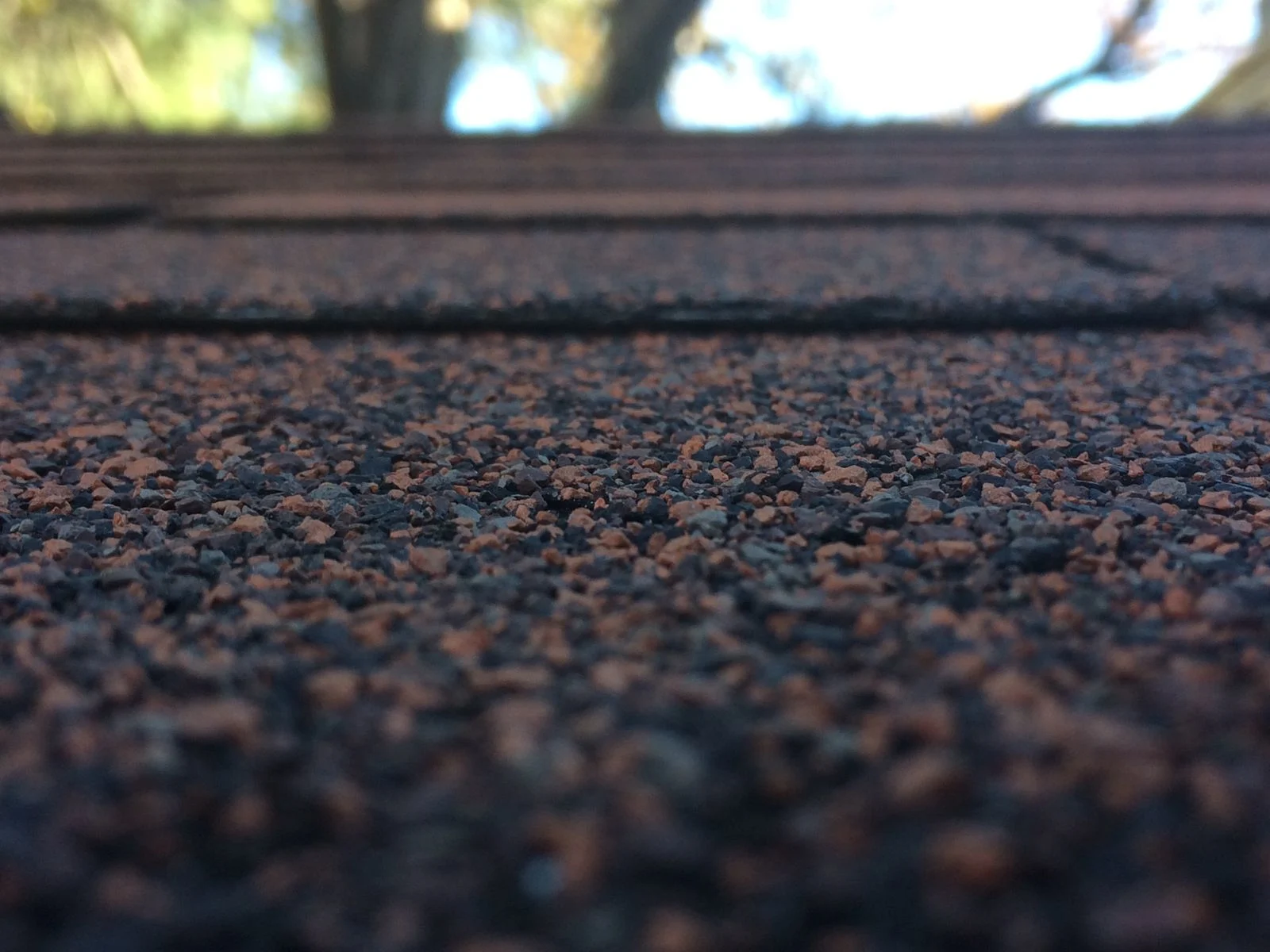
Asphalt shingles change with exposure and time, but age alone is not a diagnosis. GAF's roof-condition guidance identifies cracking, curling, missing shingles, and excessive granule loss as reasons to seek assessment. It also notes that occasional granule loss is normal and that substantial loss with bare patches can be associated with aging.
Use those observations to ask better questions. How widespread is the condition? Was it visible in an earlier inspection? Does it affect only a previously repaired section? A written report should locate the observation and explain its significance. Simply describing a roof as old leaves too much unanswered for either maintenance planning or a storm-related review.
Separate the age of the building from the age of the roof covering. If the front slope was replaced after an earlier event, record that separately from the remaining slopes. Where records are missing, say so. Uncertainty about installation history should not become an invented installation year in the inspection report.
Why granules, dark spots, and dents need context
The Nebraska Department of Insurance's hail-damage guide explains that granule loss by itself does not establish hail damage. It also identifies other conditions that may resemble storm damage, including shingle aging, blistering, and discoloration. Its physical-condition discussion is useful background; a homeowner still needs a property-specific assessment.
A practical inspection question is: what additional finding supports the proposed cause? If a report labels a small dark area as an impact, ask for the surrounding view and the inspector's explanation. If it attributes a condition to aging, ask which observations support that conclusion. Neither a dramatic close-up nor a broad dismissal explains the roof on its own.
Do not press, scrape, lift, or repeatedly handle shingles to test an internet description. That can change the condition being evaluated and create an access risk. Preserve original photographs and let the inspecting professional explain the methods used. PerilBridge's hail-vs.-wind roof damage article provides a separate overview of the different storm indicators professionals may consider.
Use weather history as context, not a property verdict
The NOAA Storm Events Database provides records of significant weather events. It is a useful starting point for identifying reported activity in an area. A regional record, however, is not an inspection of your roof. Treat it as context to compare with property observations, rather than a substitute for them.
Keep three dates distinct: the reported weather event, the date you first noticed a condition, and the date someone inspected it. For example, a stain noticed on Monday after a Saturday storm is a Monday observation with a possible Saturday connection. Record that sequence honestly rather than changing the discovery date to fit an assumed explanation.
Ask any report provider to identify the source, location, and time window used. Save the actual report instead of only a cropped map or a promotional screenshot. If several storms occurred in the same period, list the known events and let the assessment address that uncertainty. Avoid selecting a storm date solely because a neighbor received a new roof.
Build a condition comparison, not a replacement argument
A simple comparison sheet helps homeowners, contractors, and adjusters discuss the same facts. Use one row per observation and include the location, earlier condition if known, current condition, supporting record, and unresolved question. The purpose is to make missing information visible before anyone treats an assumption as a finding.
Roof section: identify the front, rear, garage, or another clearly labeled area.
Earlier record: name the dated photo, invoice, or report being used for comparison.
Current observation: describe what is visible without assigning a cause prematurely.
Inspection finding: record the professional's explanation and supporting evidence.
Open question: note inaccessible areas, missing records, or additional assessment needed.
For example, an earlier report might show discoloration over a garage while a current photograph shows a displaced component elsewhere. Keep those observations separate. Do not combine every visible issue into one storm label, and do not assume an earlier maintenance concern explains every new observation. This is an illustrative recordkeeping example, not a finding about a particular roof.
Ask for an explanation that can be checked
When arranging an inspection, describe what you observed and what you need clarified. Ask the inspector to distinguish physical observations, likely explanations, and limitations. That structure is more useful than starting with a desired repair scope and working backward to justify it.
Useful questions include: Which roof areas were inspected? Which could not be accessed? What appears consistent with existing deterioration? What findings support a new event-related change? What other explanations were considered? Does the recommended work address maintenance, documented physical damage, or both? Ask for the relevant photographs and notes alongside the answer.
A qualified inspector may recommend further evaluation when the available evidence is insufficient. An honest limitation is useful information. PerilBridge's guide to reading a roofing inspection report explains how to review the document's organization and supporting material. Keep any follow-up questions specific to a location or finding so the response can resolve the actual gap.
Keep repair planning separate from policy decisions
A physical repair recommendation and an insurance coverage decision answer different questions. Ask the contractor to explain the proposed work, quantities, materials, and basis for the scope. Ask the insurer about the applicable policy provisions and the information it needs for its review. An inspection report supports that review; it does not determine the insurer's decision.
Likewise, a maintenance concern can deserve attention even while the cause of another condition remains unresolved. Ask for clear descriptions of temporary protection, maintenance work, and proposed permanent repairs. Keep estimates and authorizations understandable so everyone knows what work is being discussed and what still needs clarification.
For regional carriers and IA firms, a useful intake standard is a report that identifies both observed damage and relevant pre-existing conditions without collapsing them into a single conclusion. PerilBridge's carrier workflow overview describes its approach to assignment, contractor documentation, and review visibility. Consistent records help the people responsible for each decision see the same evidence.
Choose the next step based on the unresolved question
If you have only noticed a change from the ground, request an assessment and share the known timeline. If you already have a report, identify the specific explanation or supporting image that is missing. If two reports disagree, compare their observations, inspection areas, and limitations before treating either conclusion as complete.
Homeowners can use PerilBridge's roof inspection intake to describe the property and request help with the next inspection step. Bring the earlier records you have, preserve new observations, and keep unknowns visible. A useful roof wear and tear vs. storm damage assessment explains the evidence well enough for the next person to understand what is known and what still requires review.